
Trusted Partners Still Need Revalidation: Why Risk Never Stands Still
Trust is built over time. Risk, however, changes constantly. Many organisations assume that long-standing partners remain reliable simply because they have performed well in the past. This assumption creates a dangerous gap between perceived assurance and actual risk exposure.
The reality is that trusted partners operate in environments that evolve faster than relationships do. Without periodic revalidation, organisations inherit blind spots that only become visible when something goes wrong.
This misconception is often captured in a familiar belief, illustrated in the Myth image: Trusted partners do not need revalidation. In practice, this belief overlooks how quickly risk landscapes shift.
Why Partner Risk Changes Over Time
Risk is not static, even when contracts and relationships are. Several factors can alter a partner’s risk profile without obvious warning signs.
Ownership and leadership structures may change, introducing new priorities or cost pressures. Staffing turnover can reduce institutional knowledge or weaken operational discipline. Subcontractors may be added quietly, expanding exposure beyond the original scope of due diligence. Regulatory environments evolve, especially across borders, creating new compliance and legal risks. Local threat conditions also shift, whether due to crime trends, political instability, or supply chain disruption.
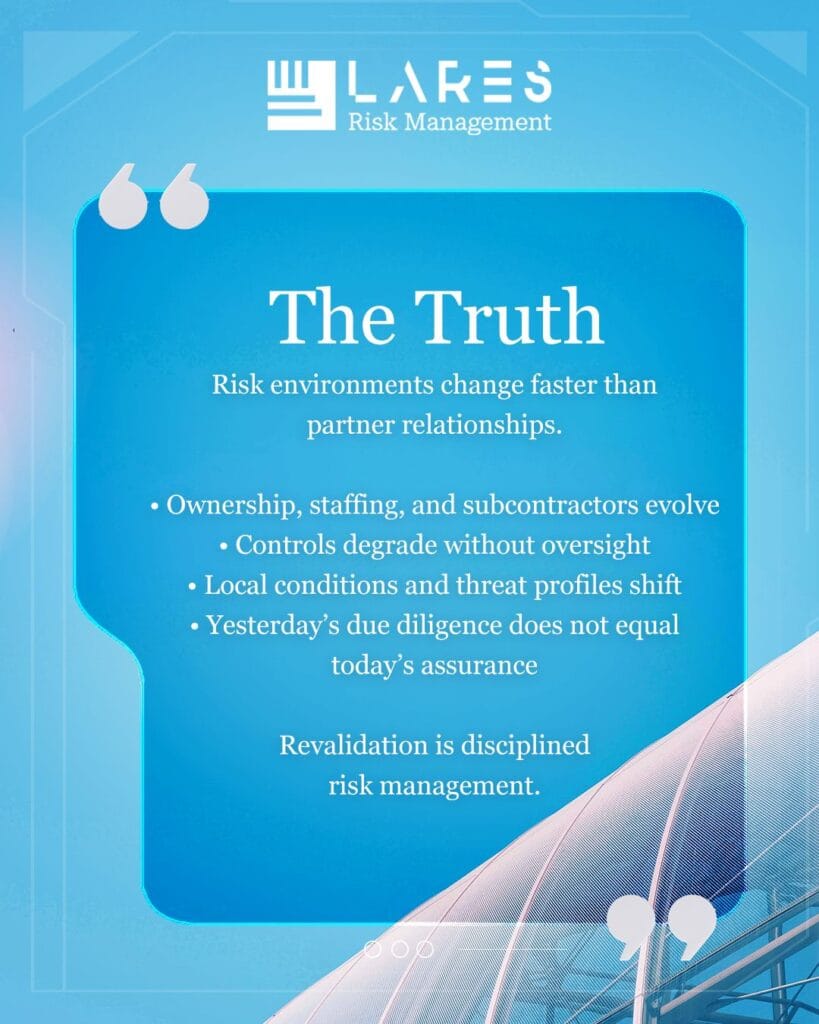
These changes are reflected in the Truth image: Risk environments change faster than partner relationships.
Controls that were once effective can degrade without oversight. Processes drift. Reporting becomes inconsistent. Assumptions made during onboarding no longer reflect operational reality. Yesterday’s due diligence does not equal today’s assurance.
Revalidation Is Not Distrust
Revalidation is often misunderstood as a challenge to the relationship itself. In reality, it is a core element of disciplined risk management. Effective partner revalidation is not about questioning integrity or intent. It is about maintaining visibility as conditions change. It ensures accountability remains clear, controls remain effective, and emerging risks are identified early rather than after an incident.
Organisations that regularly revalidate partners are better positioned to manage operational risk, security exposure, and regulatory compliance. They reduce the likelihood of surprise failures and strengthen resilience across their supply chain and third-party ecosystem. Trust remains important. But trust without ongoing verification creates vulnerability. Revalidation ensures that trust is supported by current, evidence-based assurance, not outdated assumptions.
For more information on this topic:
📩 info@laresriskmanagement.com
🌐 Contact our organisation
📰 View all insights