
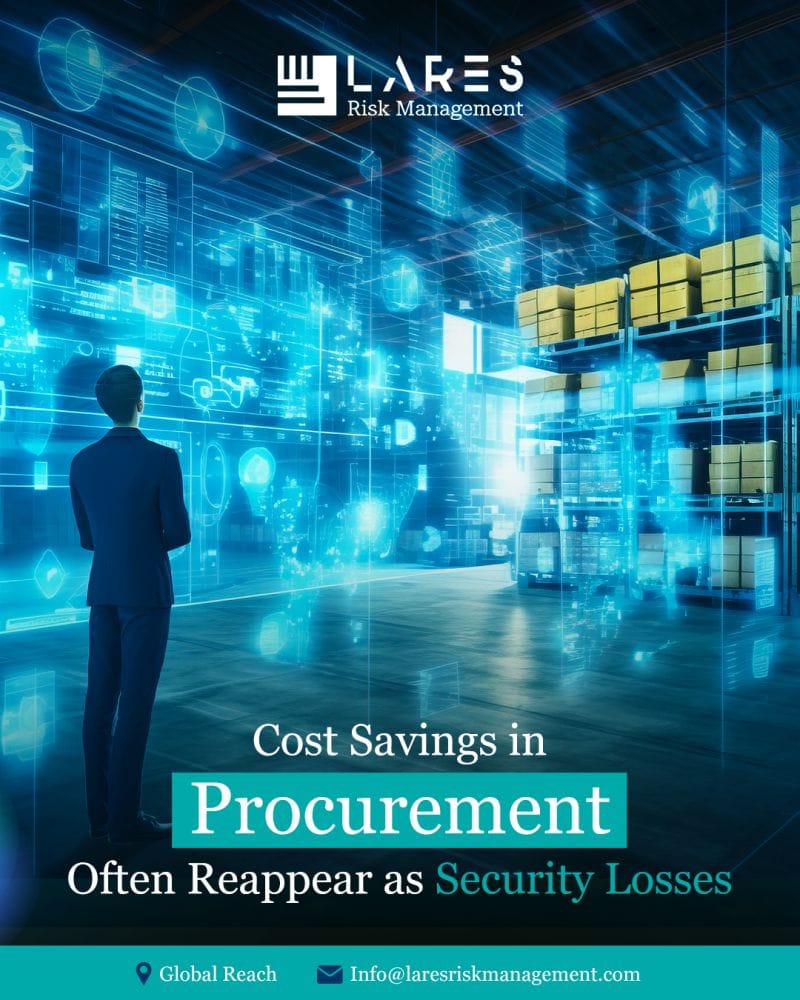
Short-Term Procurement Savings and Long-Term Risk
Procurement decisions are often driven by immediate cost pressures. In competitive markets, reducing spend on suppliers, logistics providers, or oversight mechanisms can appear to deliver quick financial wins. However, short-term procurement savings frequently introduce long-term security and operational risk that is far more expensive to manage once it materialises.
Unvetted vendors, lowest-cost logistics routes, and reduced supplier oversight can weaken the security posture of the entire supply chain. While these decisions may lower upfront procurement costs, they often increase exposure to theft, cargo loss, fraud, counterfeiting, regulatory non-compliance, and service disruption. The impact rarely stops at financial loss. Delayed deliveries, compromised product integrity, and customer dissatisfaction can quickly escalate into reputational damage and loss of trust.
How Security Risk Shifts Across the Supply Chain
Security risk in procurement rarely disappears. It shifts. When cost efficiency becomes the dominant decision driver, risk is often transferred downstream to operations, legal teams, and crisis response functions. A single incident involving a compromised supplier or insecure logistics partner can disrupt production schedules, trigger contractual penalties, and divert leadership attention away from strategic priorities.
Supply chains today are more complex and interconnected than ever. Global sourcing, extended supplier networks, and reliance on third-party service providers increase both opportunity and exposure. Without appropriate due diligence and ongoing monitoring, organisations may lack visibility into who is handling their goods, how assets are protected in transit, or whether vendors meet expected security and compliance standards. These blind spots are frequently exploited by criminal activity, insider threats, or opportunistic fraud.
Integrating Security Into Procurement Decision-Making
Effective procurement risk management requires a balanced approach. Cost efficiency and security are not mutually exclusive, but they must be assessed together. This means integrating security considerations into procurement decisions, vendor selection, and contract management processes. Practical measures include supplier vetting, risk-based segmentation of vendors, clear security expectations, and proportionate oversight aligned to operational criticality.
Resilient organisations recognise that procurement is not just a commercial function. It plays a critical role in protecting operational continuity and brand reputation. By understanding how procurement decisions influence security risk across the supply chain, leaders can make informed trade-offs that support both financial performance and long-term resilience.
Ultimately, the true cost of procurement decisions is revealed over time. Savings achieved at the expense of security often reappear as losses during incidents and disruptions. Organisations that take a measured, risk-informed approach to procurement are better positioned to reduce hidden exposure, protect their operations, and maintain trust with customers and partners.
For additional details, please reach out to:
📩 info@laresriskmanagement.com
🌐 Get in touch
📰 Related insights