
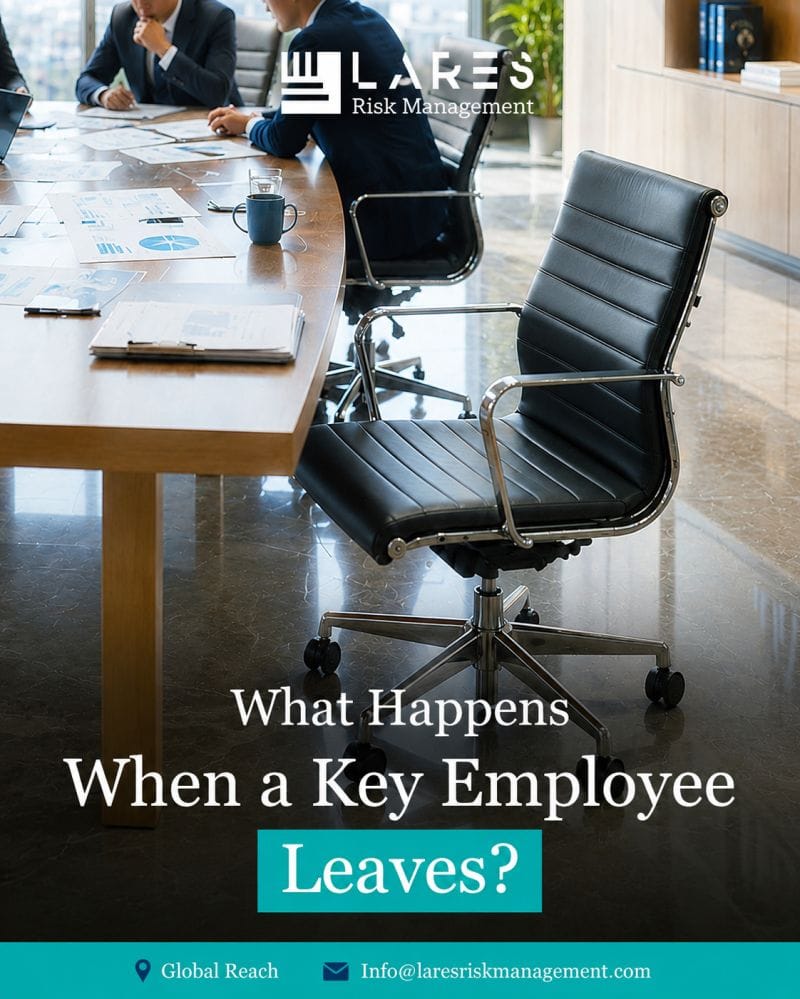
Key-Person Risk: The Hidden Threat to Business Continuity
When a key employee leaves, most organizations immediately focus on recruitment. Finding a replacement is important, but it does not address the full impact of losing someone who holds critical knowledge, relationships, or operational expertise.
The bigger question is: what leaves with them?
Key-person risk occurs when important business knowledge, responsibilities, relationships, or expertise are concentrated in one individual. This can include knowledge of internal processes, critical business relationships, operational procedures, and access to systems. If that knowledge has not been properly documented or shared, replacing the employee may not fully replace what the organization has lost.
For this reason, key-person risk management should be considered as part of a broader business continuity and organizational resilience strategy. Identifying critical dependencies before they become a problem allows organizations to better understand where operational continuity may be vulnerable.
How Key Employee Risk Can Create Knowledge Loss
The departure of a key employee can create more than a recruitment challenge. It can result in the loss of institutional knowledge and operational expertise that has developed through experience and day-to-day involvement.
In some organizations, critical processes may depend heavily on an individual’s understanding rather than documented procedures. Important relationships may also be built around specific employees. When these dependencies are not identified, the potential impact of employee departure can remain largely invisible until the individual is no longer available.
A key-person risk assessment can help organizations identify where critical knowledge and responsibilities are concentrated. Asking the following questions is a practical starting point:
- Who holds critical knowledge within the organization?
- Which business processes depend heavily on specific employees?
- What would happen if a key employee left tomorrow?
- How quickly could another employee take over their responsibilities?
- Which important relationships or operational expertise could be difficult to replace?
Understanding these dependencies helps organizations identify potential gaps in business continuity planning and risk management.
Identifying Key-Person Dependencies and Organizational Risk
Effective organizational resilience requires businesses to understand not only their physical, financial, and operational risks, but also their dependence on critical people and knowledge.
Identifying key-person dependencies provides greater visibility into where knowledge loss could affect continuity. It can also highlight areas where processes, responsibilities, and expertise may need to be better distributed or documented.
This is particularly important when an organization relies heavily on individual experience to maintain day-to-day operations. The objective is not simply to prepare for employee turnover. It is to improve the organization’s ability to maintain continuity when circumstances change.
By proactively identifying key-person risk, organizations can move from reacting to employee departures to preparing for potential disruption before it occurs.
Strengthen Key-Person Risk Management and Business Resilience
Key-person risk is ultimately a business continuity and resilience issue. When critical knowledge and operational expertise depend on a limited number of individuals, an unexpected departure can create challenges that extend beyond recruitment.
A structured approach to key-person risk management helps organizations identify critical dependencies and understand where continuity may be vulnerable. This provides a stronger foundation for protecting institutional knowledge, maintaining operational stability, and improving organizational resilience.
At LRM, we help organizations identify and address risks that can affect business continuity and resilience. Understanding where key-person dependencies exist is an important step toward reducing uncertainty and preparing the organization for change.
Is your organization dependent on a few key employees for critical knowledge or operations? Contact LRM to discuss how a structured risk management approach can help identify key-person risk and strengthen business continuity.
For additional details, please reach out to:
📩 info@laresriskmanagement.com
🌐 Get in touch
📰 Related insights