
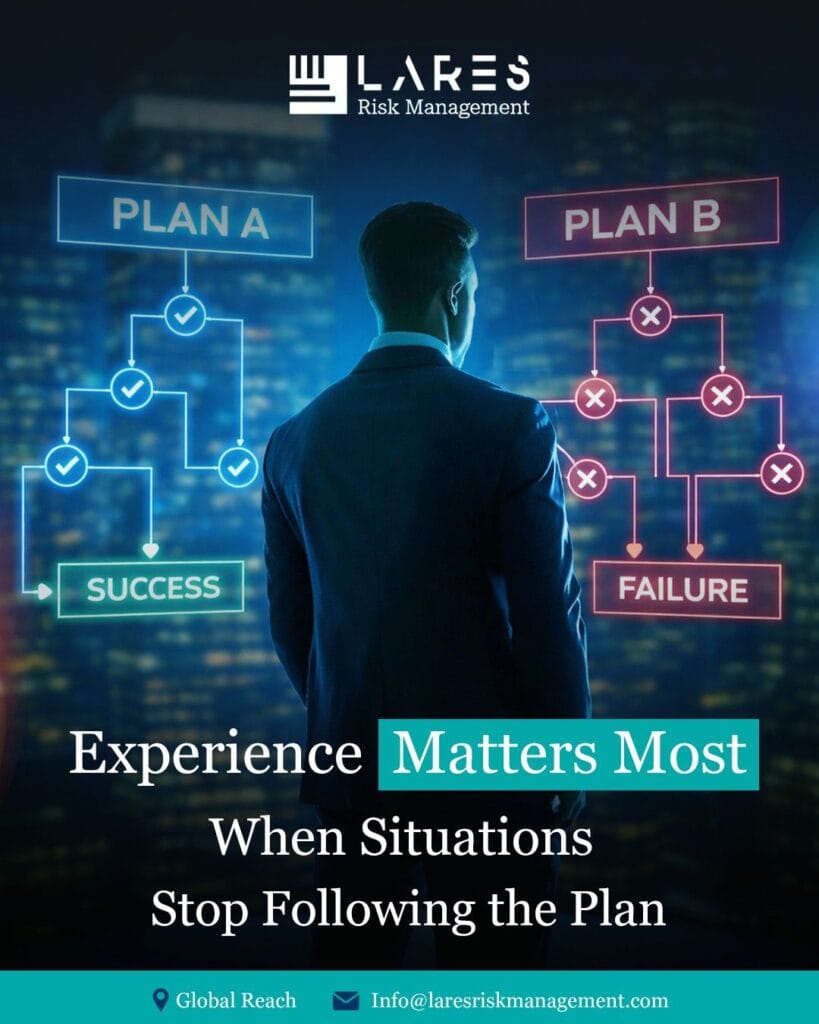
Why Risk Management Plans Alone Are Never Enough
Plans are essential in risk management. They provide structure, clarity, and a starting point for action. But no plan can anticipate every variable, especially when operating across complex environments. Conditions change, intelligence becomes incomplete, and decisions must often be made in real time with limited information.
In high-risk situations, rigid reliance on predefined procedures can slow response rather than strengthen it. What matters most is the ability to interpret what is happening on the ground and adjust without losing control. This is where experience becomes critical. Experienced risk professionals understand that plans are tools, not guarantees. They know when to follow them and when conditions require a different approach.
The Role of Experience in Dynamic Risk Environments
Experienced teams do more than execute protocols. They assess context continuously, identify emerging risks, and respond proportionately as situations evolve. This ability comes from having seen how incidents actually unfold, not just how they are expected to unfold on paper.
When intelligence is fragmented or contradictory, experience helps separate signal from noise. When pressure increases, it enables calm decision making rather than hesitation. Teams with real-world exposure recognise early warning signs, understand local operating environments, and anticipate second-order risks that plans often overlook.
This adaptability is especially important in security risk management, executive protection, and operational risk environments where delays or misjudgements can escalate quickly.
Operating Effectively When Conditions Shift
Crises rarely follow linear timelines. Situations can stabilise, deteriorate, or shift direction entirely within hours. Effective response depends on the ability to operate in the gap between what was expected and what is actually happening.
Experienced operators understand where plans tend to break down. They know how to maintain oversight while adapting tactics, reallocating resources, or adjusting routes and timelines. This balance between structure and flexibility is essential for managing risk without creating unnecessary exposure.
Global Risk Requires Practical Experience, Not Perfect Information
At Lares Risk Management International, operations span multiple regions and operating environments. Supporting clients globally means working in conditions where perfect information is rarely available and decisions must be made despite uncertainty.
Global risk does not pause for ideal circumstances. It demands professionals who can assess risk dynamically, respond decisively, and maintain operational continuity when plans meet reality. In those moments, experience is not an advantage. It is the difference between effective response and operational paralysis.
For further information:
📩 info@laresriskmanagement.com
🌐 Contact us
📰 Other insights